
Bhupesh Nadkarni
Introduction
The USA spends more on healthcare than any other developed nation, yet ranks poorly on nearly every measure of health status. It is a perplexing paradox — a land of cutting-edge medical technology and exorbitant healthcare bills, seemingly failing to deliver optimal health outcomes.
The answer lies not in the intricacies of medical procedures or the latest pharmaceuticals but in areas often overlooked — the Social Determinants of Health (aka SDOH). Evidence suggests that a staggering 80% of an individual’s health outcomes are shaped not by the quality of healthcare services received but by the very conditions where they live, learn, work, and play.
SDOH contributes to wide health disparities and inequities. For instance, people who do not have access to grocery stores with healthy foods are less likely to have proper nutrition. It raises the risk of them developing health conditions like heart disease, diabetes, and obesity and lowers life expectancy relative to people who have access to healthy foods.
But understanding the problem is only the first step. The question begs: if SDOH holds the key to unlocking the USA's true health potential, how can we begin to turn the tide?
What are SDOH?
SDOH, as defined by the World Health Organization, are the conditions in the environments where people are born, live, learn, work, play, worship, and age that affect a wide range of health, functioning, and quality-of-life outcomes and risk.
The U.S. Department of Health and Human Services (HHS) categorizes the social determinants of health into five groups:
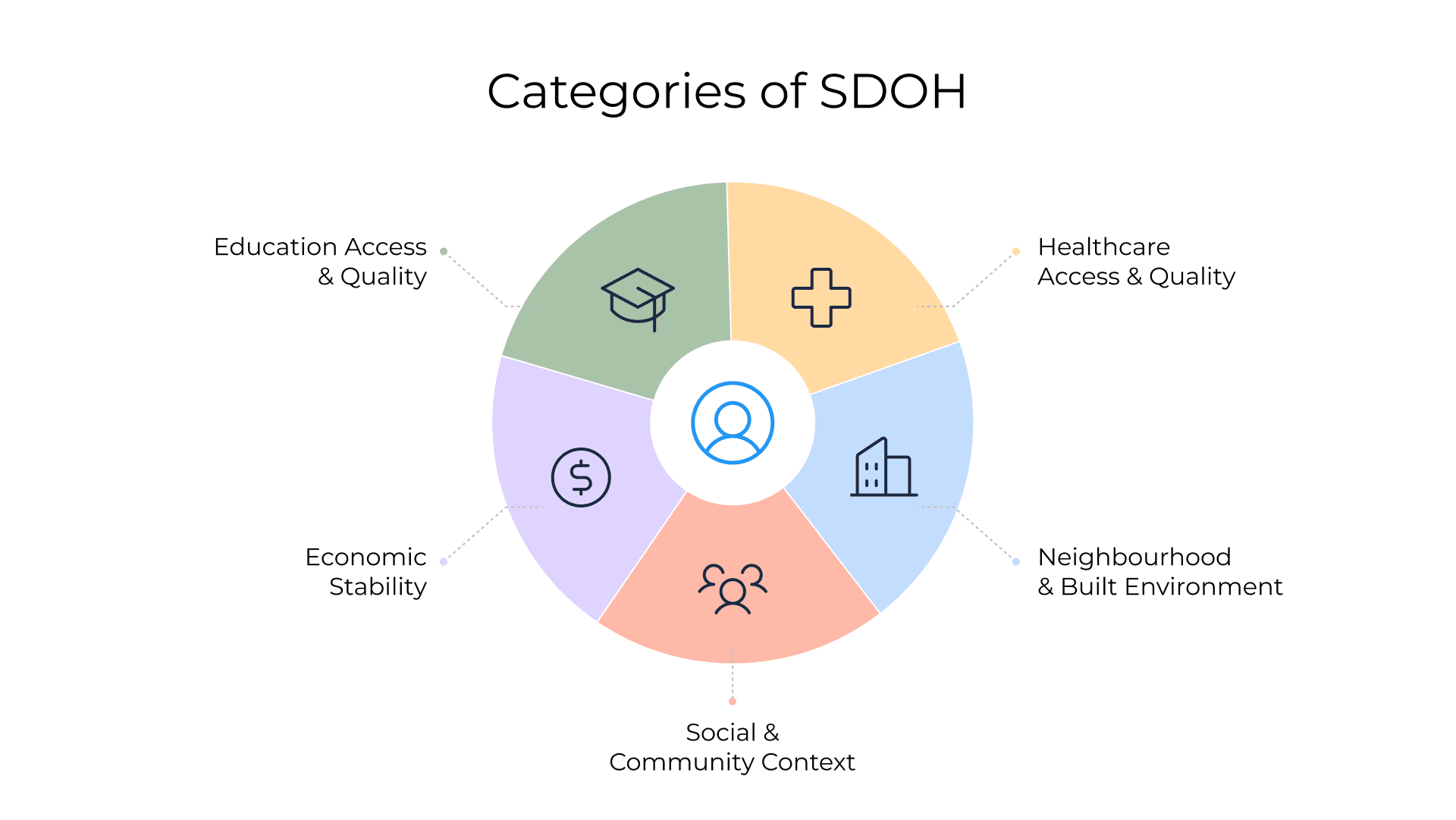
These groups can be further broken down into multiple factors presenting the social determinants of health that are pivotal in shaping health outcomes.
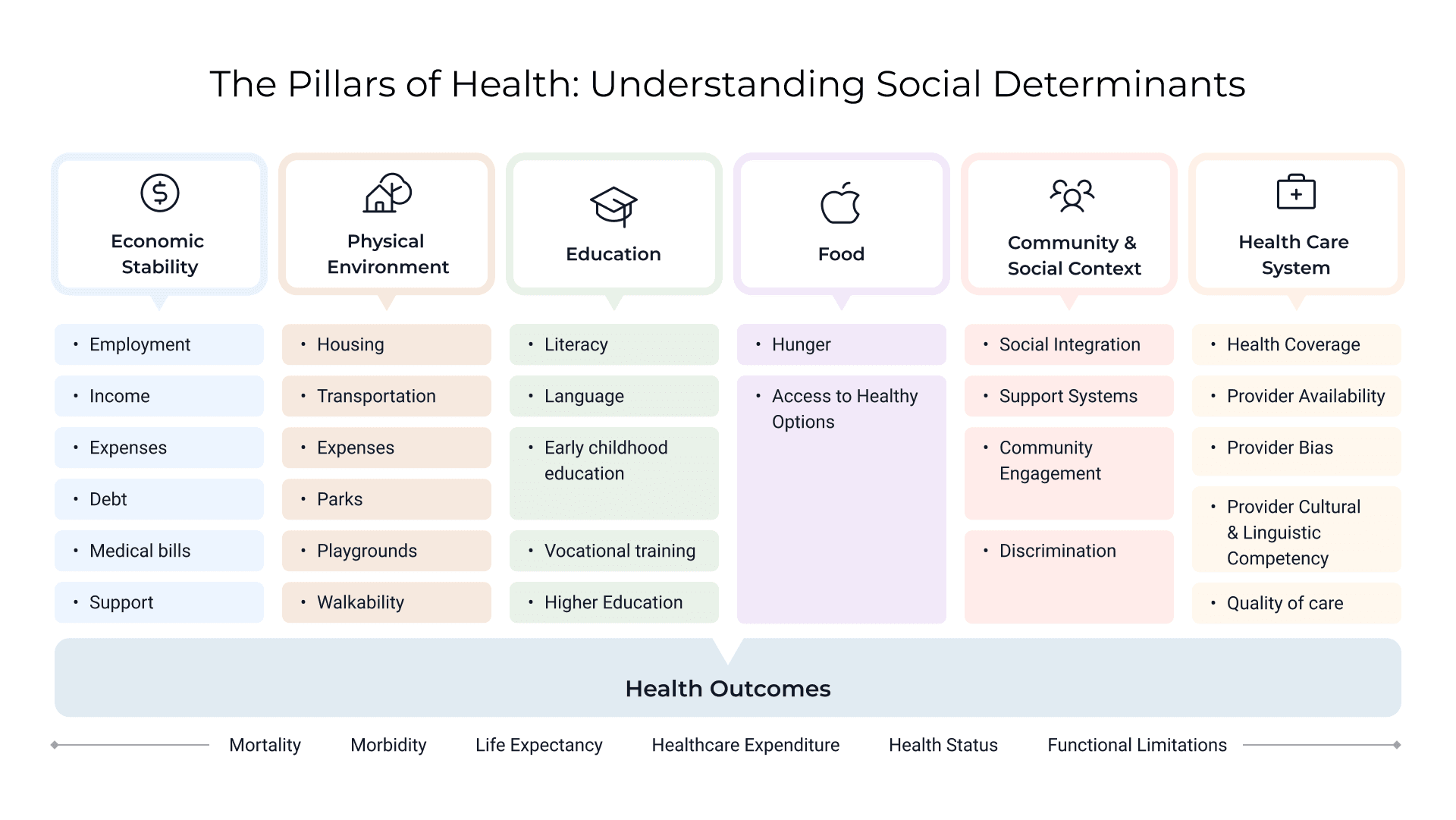
Why are SDOH important?
Though healthcare is essential to health and well-being, it has a relatively low influence as a health determinant. Health outcomes such as morbidity and mortality are driven more by other factors, including underlying genetics, health behaviors, social and environmental factors, and access to healthcare.
Health Factors, as shown below, represent areas where we can improve to live longer and healthier lives:
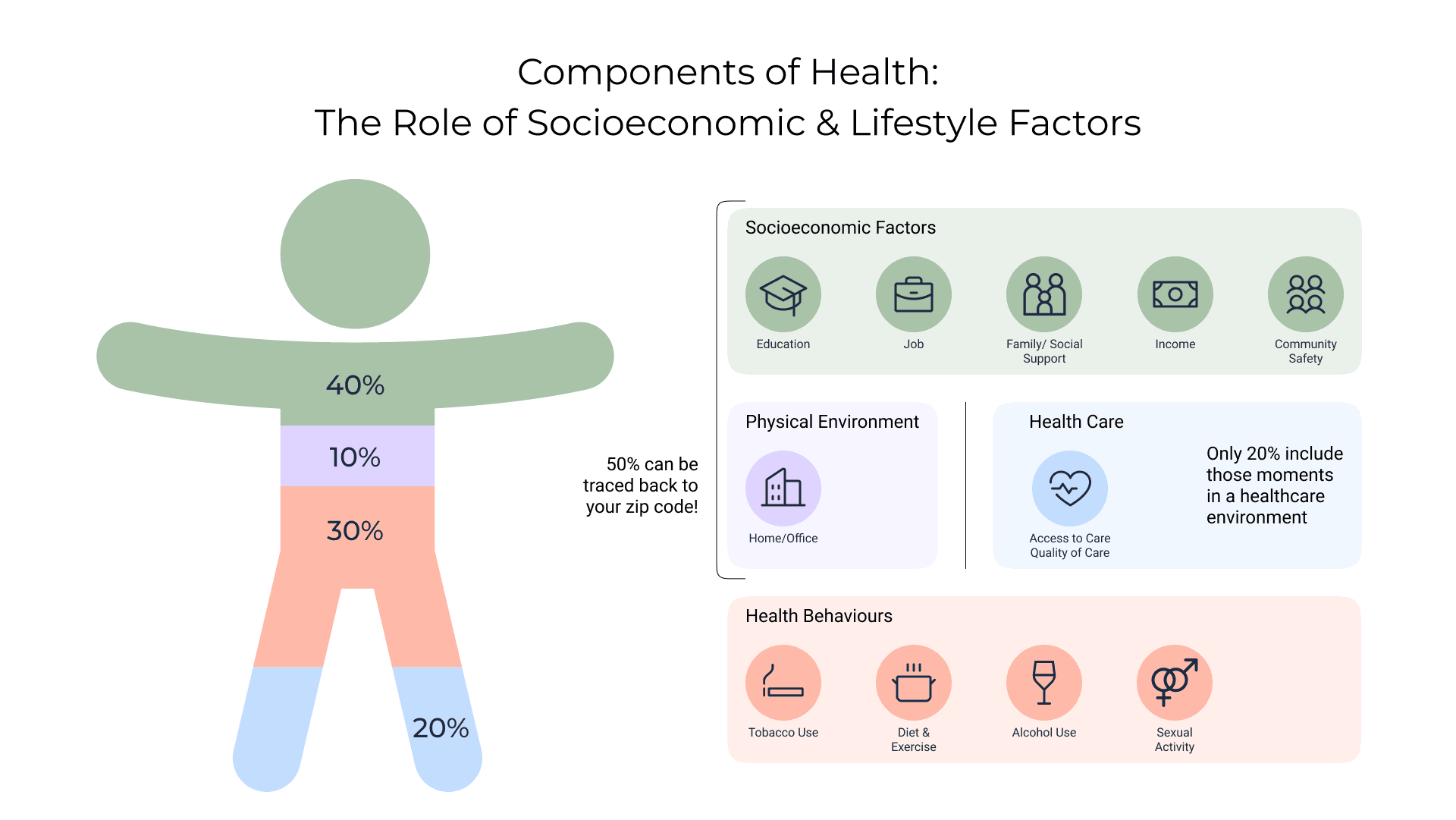
While there is no consensus on the magnitude of the relative contributions of each of these factors to health, various studies suggest that Health Behaviors, such as smoking, diet, exercise, and social and economic factors, are the primary drivers of health outcomes. This means that almost 80% of the health determinants are influenced by socioeconomic factors.
The silver lining is that the realization that social factors can negatively impact health outcomes has grown over the past decade. As health systems transition toward value-based care, managing the overall cost of care is essential. Provider organizations are therefore re-evaluating how SDOH influence their patients’ health and quality of life.
Collecting, Analyzing and Leveraging SDOH
SDOH can be effectively collected by empowering and incentivizing provider organizations. The information can be collected before, during, or after a healthcare encounter through structured health risk assessments and screening tools. SDOH-related Z codes range from ICD-10-CM categories Z55-Z65 and are used to document SDOH data (e.g., housing, food insecurity, lack of transportation, etc).
Once captured and codified, SDOH data analysis can help with value-based care to significantly improve the quality, coordination, and experience of care in more ways than one:
- Predictive Analytics: Harnessing SDOH data can identify patients at risk for specific health issues, allowing for targeted interventions and preventive measures. This translates to cost savings and improved population health outcomes.
- Social Prescribing Platforms: Tech platforms connecting patients to community resources like food banks, job training programs, and mental health services can empower individuals and address SDOH challenges head-on.
- Personalized Care Navigation: AI-powered chatbots and mobile apps can provide patients with 24/7 access to health information, medication reminders, and social support, breaking down barriers to care and promoting self-management.
- Building Interoperable Solutions: Standardizing and harmonizing SDOH data with solutions that integrate diverse SDOH data sources from social services, public health agencies, and community organizations into healthcare systems.
- Developing Secure and User-Friendly Platforms: Building intuitive mobile apps and web portals that connect patients to relevant social services and community resources based on their SDOH needs.
- Personalized Care Navigation: Integrating SDOH data with clinical platforms to tailor patient outreach, education materials, and appointment scheduling based on individual needs and social determinants.
- AI-Powered Self-Management Tools: Building chatbots and virtual assistants that offer 24/7 support, medication reminders, and personalized health guidance tailored to patients' SDOH context.
- Advanced Predictive Models: Analyzing integrated SDOH data to identify patients at risk for specific health complications, predicting potential hospital readmissions, and guiding targeted interventions.
- Create Actionable Insights: Generating reports and dashboards for healthcare providers and public health officials, highlighting SDOH hotspots, and informing resource allocation and policy decisions.
Conclusion: Shaping the Future of Healthcare through SDOH
As we delve deeper into understanding the factors affecting health, it brings us to a simple yet profound understanding — improving health goes beyond the clinic. It is about our environments, communities, and the daily choices we face and make. This insight prompts a broader perspective on healthcare delivery, where technology plays a crucial role in bridging gaps and enhancing access.
Coditas, with its specialized technological expertise, stands equipped to support healthcare providers in this endeavor. Our specialized services are designed to empower the industry, ensuring that healthcare systems are not only more efficient but also more attuned to the holistic needs of individuals. By integrating innovative solutions and bridging the data divide, we can collectively rewrite the narrative of healthcare, one social determinant at a time.
Ready to make a difference? Join us in transforming healthcare to create a healthier, more equitable future for all. Get involved, share your insights, and be a part of the change. Visit https://coditas.com/industries/healthcare to know more.