
Nameera Uzair
On Saturday, 27 June 2026, Coditas hosted Deployed: AI Showcase by Coditas at Gaia Apex, Viman Nagar, Pune. The compact morning brought builders, designers, product managers, growth leaders, and AI practitioners into one room for live workflows, sharp demos, open Q&A, and a quick-fire quiz.
The agenda closed with a group photo and networking, but the conversations kept moving. The Q&A from each session carried into the networking hour, with attendees asking speakers for workflow details, tool choices, and ways to bring similar AI systems into their own teams.
By the time people left, the next question was already in the room: when is the next Deployed workshop happening?
Most teams already know where AI can show up. Deployed showed what happens when those touchpoints become working systems inside real workflows, from design-to-development handoffs and hardware-and-software agent builds to product operations and growth systems.
Four Showcases, One Focused Format
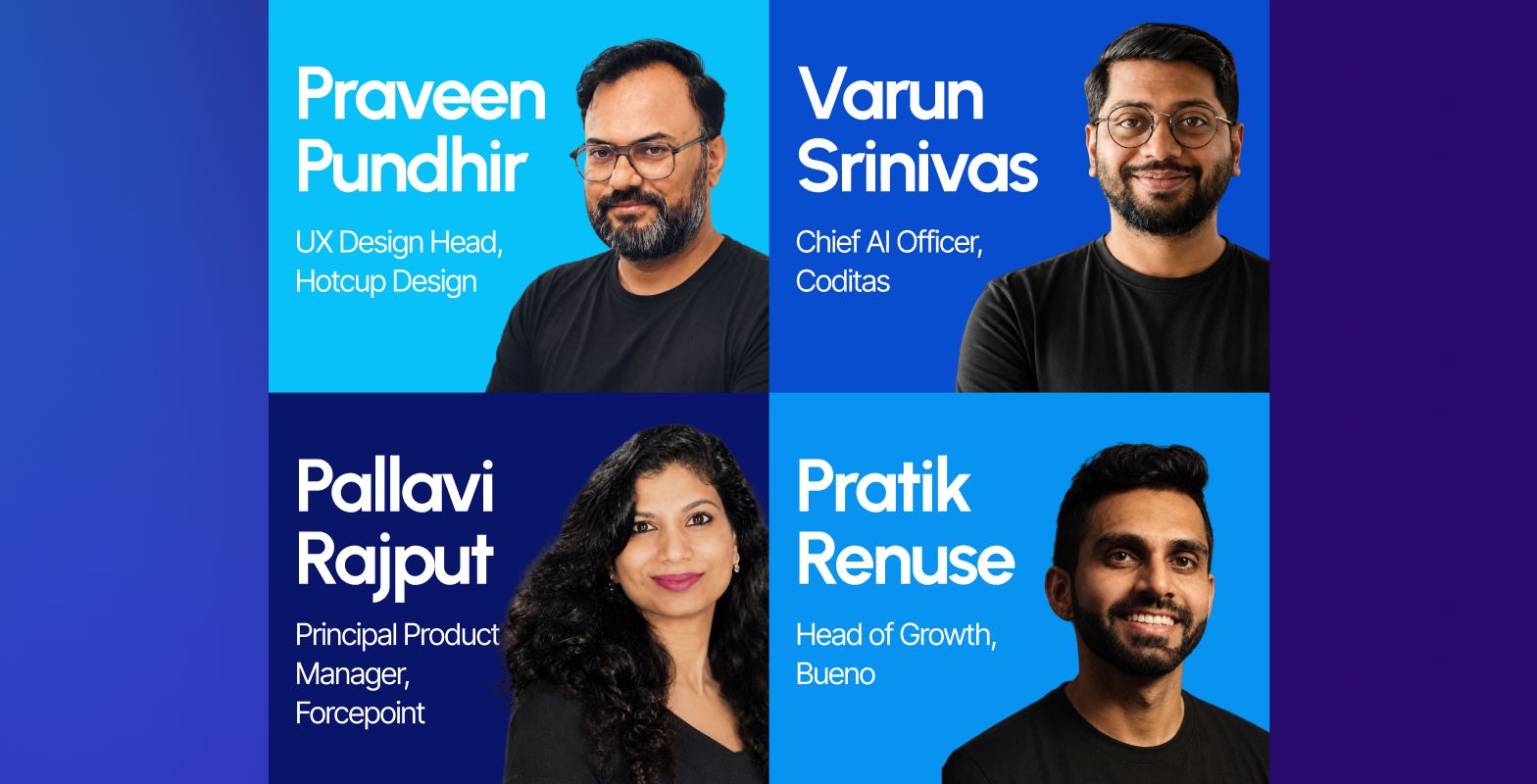
Deployed was designed around usable examples.
Each showcase focused on one function, one workflow, and one concrete application of AI. The agenda moved across design, developer experience, product management, and growth marketing. Each session followed a 15-minute talk format, followed by open Q&A.
Speakers moved quickly into the work behind the idea. The audience had enough space to ask direct questions, test assumptions, and connect each session to their own day-to-day roles.
Praveen Pundhir: The Product Handoff Is Quietly Disappearing
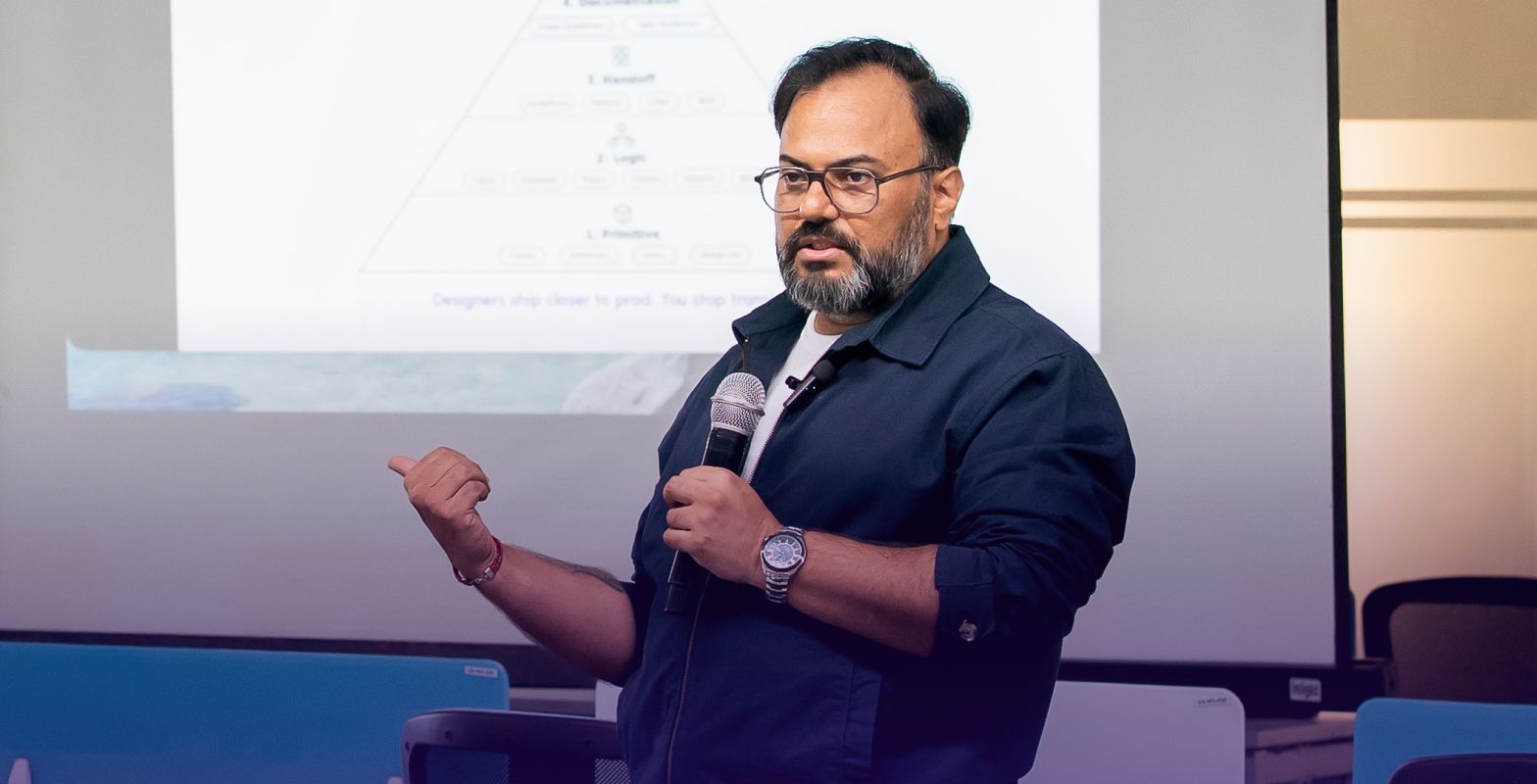
Praveen Pundhir, UX Design Head at Coditas, opened with a session on closing the design-to-development gap with AI.
His talk traced how handoffs have changed over time. Teams moved from requirements and specifications in the 2000s to wireframes, prototypes, tickets, components, and design systems in later years. The next step, as Praveen framed it, is an AI-supported workflow where design, engineering, documentation, and code work from a shared source of truth.
The problem felt familiar because every product team has seen it. A design looks complete in Figma, but the handoff still loses important details. States are half-documented. Tokens get guessed by eye. Developers interpret gaps. QA catches drift late.
Praveen’s deck called out the cost clearly: around three Slack threads per component, missing empty, error, and loading states, guessed tokens, and rework caused by mismatch.
The most concrete part of the session was the workflow structure he laid out. On the design side, it connected Figma, design tokens, themes, variants, patterns, and documentation. On the engineering side, it brought in repositories, Storybook, linters, handoff files, MCP, agent context, and shared repository documentation.
The point was to make the handoff readable for both humans and AI agents.
For Praveen, the future of handoff depends on systems that carry design intent across tools, teams, and code without forcing developers to decode static files. AI becomes useful when it reads tokens, rules, patterns, and repository context instead of guessing from a static design file.
For developers, that means less reverse-engineering. For designers, it means shipping closer to production.
Varun Srinivas: The Model Is Fixed, The Harness Is The Lever
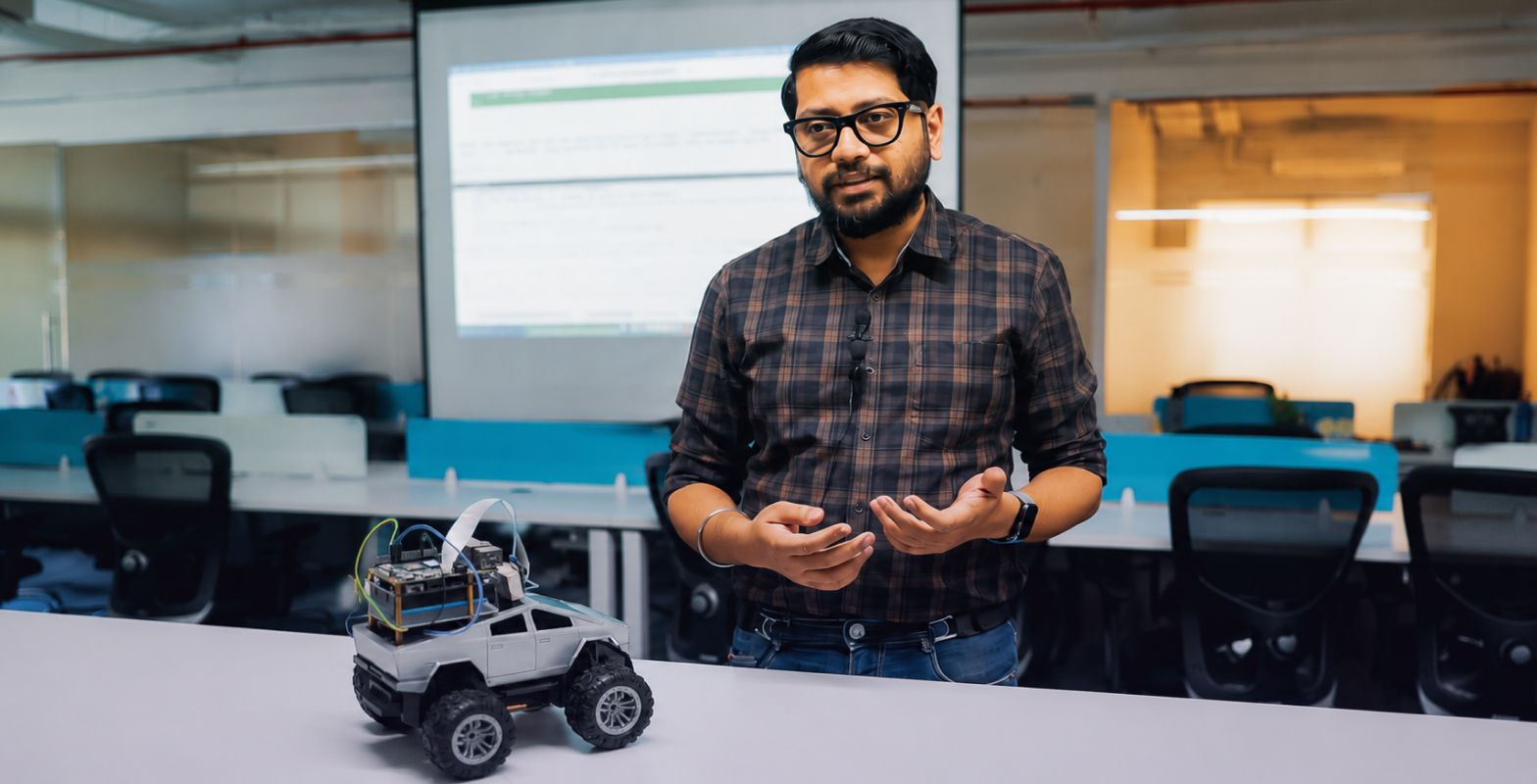
Varun Srinivas brought the hardware layer into the room and used it to make a software argument.
His session opened on a gap. Claude Code could already touch almost everything he owned: his files, email, cloud, and calendar, but it could not move a single object on his desk. So he gave it a body. He mounted a Raspberry Pi on a toy Tesla Cybertruck, connected it to a motor driver, used PWM control through GPIO pins, and added a camera. Claude Code ran on the Pi itself.
The first version worked, but it drove badly. The model reached the motors by shelling out to a script that wrote to the GPIO pins. Every movement traveled through several hops, and the model spent its reasoning parsing shell output instead of deciding where to go.
That set up the question the rest of the talk answered: if the model is this capable, why does it drive so poorly?
The turn came when Varun exposed the car’s controls as MCP endpoints. Instead of reasoning about shell commands, the model called move() directly as a first-class tool. Latency dropped sharply, and the driving became decisive.
The model and motors stayed the same; only the interface between them changed.
That result carried the thesis. The model is fixed, so the harness is the only real lever. A harness, as Varun defined it, is everything around the model that turns a next-token predictor into an agent that acts in the world. The model reasons. The harness gives it senses, hands, a nervous system, and a loop.
The point landed with an engineering audience because they already use a harness every day. Claude Code is itself a harness. Read and Grep are how it sees; the way a camera frame is how the rover sees. Edit and Bash change the world, the way the motors do. Test output is feedback. Permission prompts are the reason the rover does not drive off the table.
The truck did not introduce anything new. It made the machinery physical and visible.
Varun then showed what improving only the harness buys you. He added monocular depth estimation with MiDaS, so a single camera frame becomes a depth map, and a depth map becomes a symbol the model can act on: wall, thirty centimeters, stop.
He added a speaker and on-device text-to-speech, so the rover could narrate what it saw. It could say things like, “Oh, a door. Let me go see what’s outside.” The same model and the same truck could do considerably more because the harness around them had improved.
Varun was direct about the limits. It is a toy rover, and it is simple on purpose. The simpler the body, the clearer the evidence that the intelligence lives in the loop rather than the hardware. His camera mount, he noted, is held on with hope, which is a fair summary of how hard perception actually is.
The takeaway was a reframe of where the engineering work now sits. Prompt engineering was whispering to the model. Harness engineering is building the world the model lives in.
The model is a commodity you rent. The harness is the part you own.
Pallavi Rajput: How PMs Can Automate Repetition Without Losing Judgment
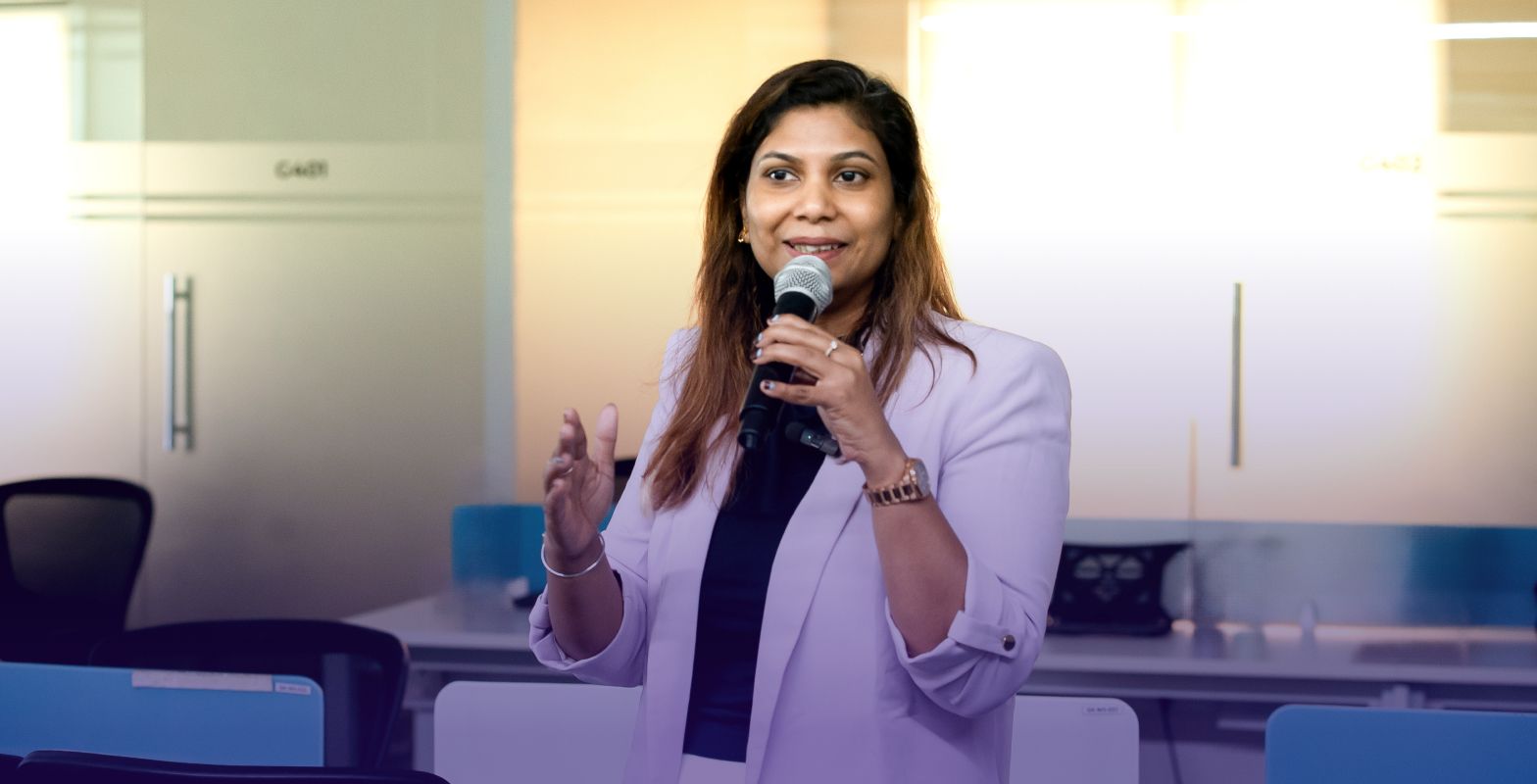
Pallavi Rajput focused her session on product management operations.
She began with a sharp breakdown of where a PM’s week often goes. Around 65% can get absorbed by writing product artifacts, reformatting, searching, and summarizing. Only about 35% goes into strategy, decisions, customer insight, and roadmap thinking.
The session centered on focused AI skills instead of generic prompts. Pallavi introduced the CRAFT framework, built around Context, Role, Actions, Format, and Tests. The framework helps PMs turn messy inputs into reliable outputs by giving AI a defined structure to follow.
The live demo made the idea land. Raw notes could become an eight-section PRD in 90 seconds when the AI had the right context, standards, template, and self-review checks.
The strongest takeaway was that AI output improves when expert thinking is written down clearly. A skill file is product experience made explicit, reusable, and testable.
People left that session with an actionable next step: pick one repetitive task, build one focused skill, save one hour, and then repeat.
Pratik Renuse: AI Tools That Turn Growth Work Into Working Systems
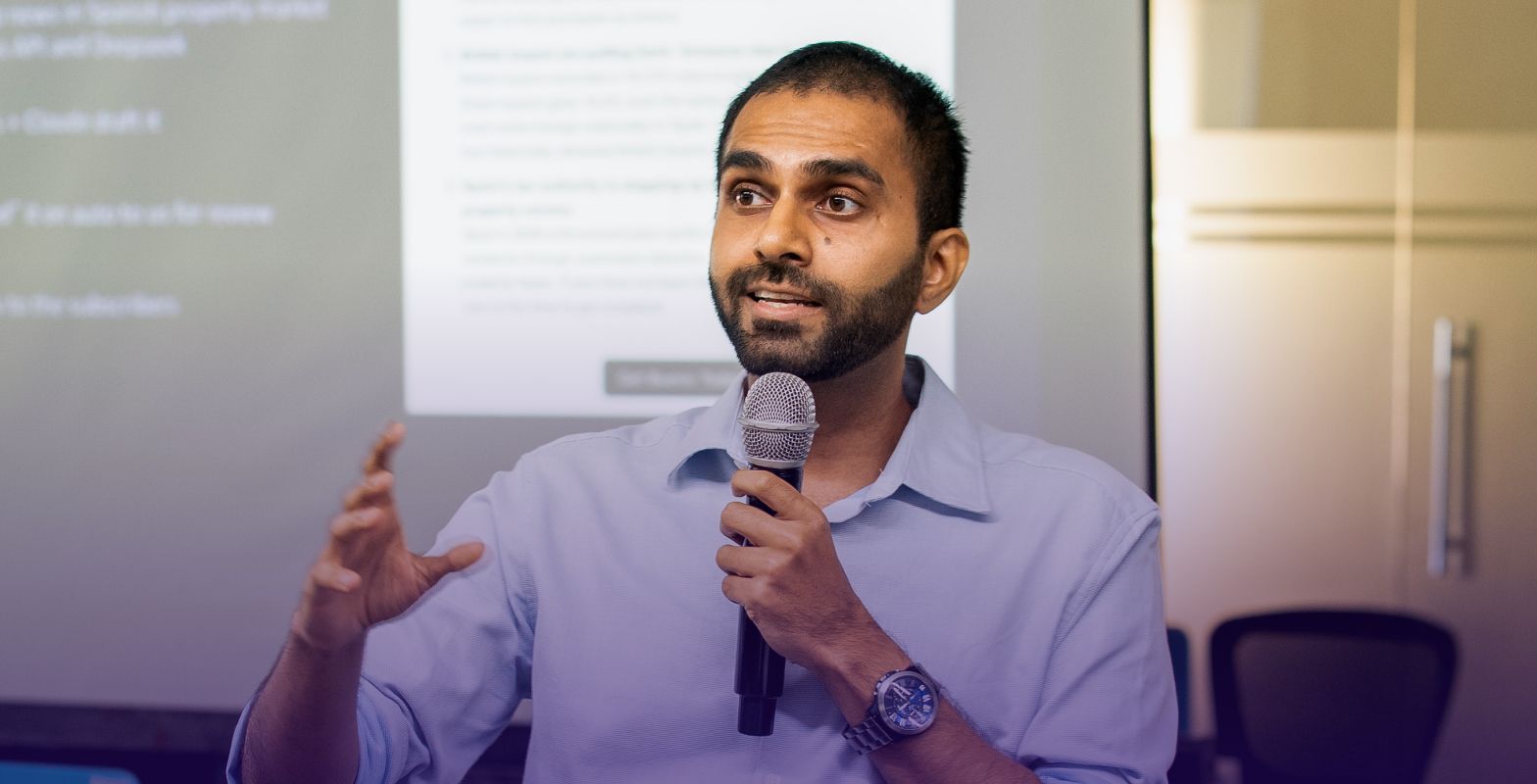
Pratik Renuse, Head of Growth at Bueno, brought the growth and marketing lens to Deployed.
His session was about how Bueno uses AI tools to support lead generation, education, and performance visibility for foreign property owners in Spain. Bueno works with a high-trust audience that relies heavily on blogs, email, and in-person engagement. Pratik noted that the company holds roughly 10% market share in Spain, which gave useful context to the scale of the growth engine behind the examples.
The session became most useful when he walked through Bueno’s AI calculators for property tax, rental tax, and related use cases. The tools gave users instant answers for problems that usually required paid guidance or hours of research.
Pratik then broke down the build pattern: scrape Spanish and government sources, combine the data into one dataset, hand it to Claude, and deploy the calculator. He noted that the tools received a 9.5 out of 10 rating and helped deliver a 2x conversion rate.
He also showed how Bueno applies AI inside its growth operations using examples like a newsletter generator, an ad insights dashboard connected to Meta Ads MCP via Claude, and a UX insights dashboard connected to Mouseflow MCP.
Each system turned scattered inputs into a clearer view of performance, user behavior, and weekly growth actions.
The takeaway was simple: AI becomes commercially useful when it is tied to customer intent, trusted data, and a workflow the team already needs to run every week.
What The Room Took Away
Praveen explained how AI can reduce friction between design intent and engineering execution. Varun demonstrated how engineering value now depends on the harness around the model, from sensors and tools to feedback loops. Pallavi helped us understand how product teams can turn repeated PM work into reusable AI skills. Pratik addressed how growth teams can convert content, data, and customer questions into interactive tools.
Together, the sessions made one point clear: AI creates value when it connects trusted context, real workflows, and a human owner who knows what quality should look like.
That is also what made the showcase feel grounded. The examples did not sit in isolation. They reflected the same kind of work Coditas teams are already exploring across design systems, engineering workflows, product operations, and AI-led growth use cases.
The attendees now have working patterns they could apply immediately.
Why The Next Deployed Should Be Bigger
The sessions sparked enough interest for attendees to ask for follow-up editions where demos, build walkthroughs, and team-level AI workflows could be explored in greater detail.
That is exactly what Deployed should become: a recurring space for people who are building with AI, testing it in real workflows, and learning from each other in public.
Coditas already works at the intersection of these conversations: design-to-development systems, AI engineering workflows, product acceleration, and growth-led AI applications. Deployed gave that work a room, a format, and a community that clearly wants more of it.
If you missed the first Deployed: AI Showcase by Coditas, don't miss the next one. Join the Coditas AI Community to get early access to upcoming Deployed events, AI workshops, speaker announcements, and exclusive community updates. See you at the next event.