
Pritesh Bhate
In recent years, there has been a shift from monolithic to microservices architecture in software development. Unlike monoliths, where communication is straightforward, microservices pose challenges in passing messages between components due to their distributed nature. While monoliths use direct method calls, microservices require more complex mechanisms like message queues or RESTful APIs for communication. This shift demands a re-evaluation of communication strategies to ensure seamless coordination and collaboration among services.
Synchronous Communication
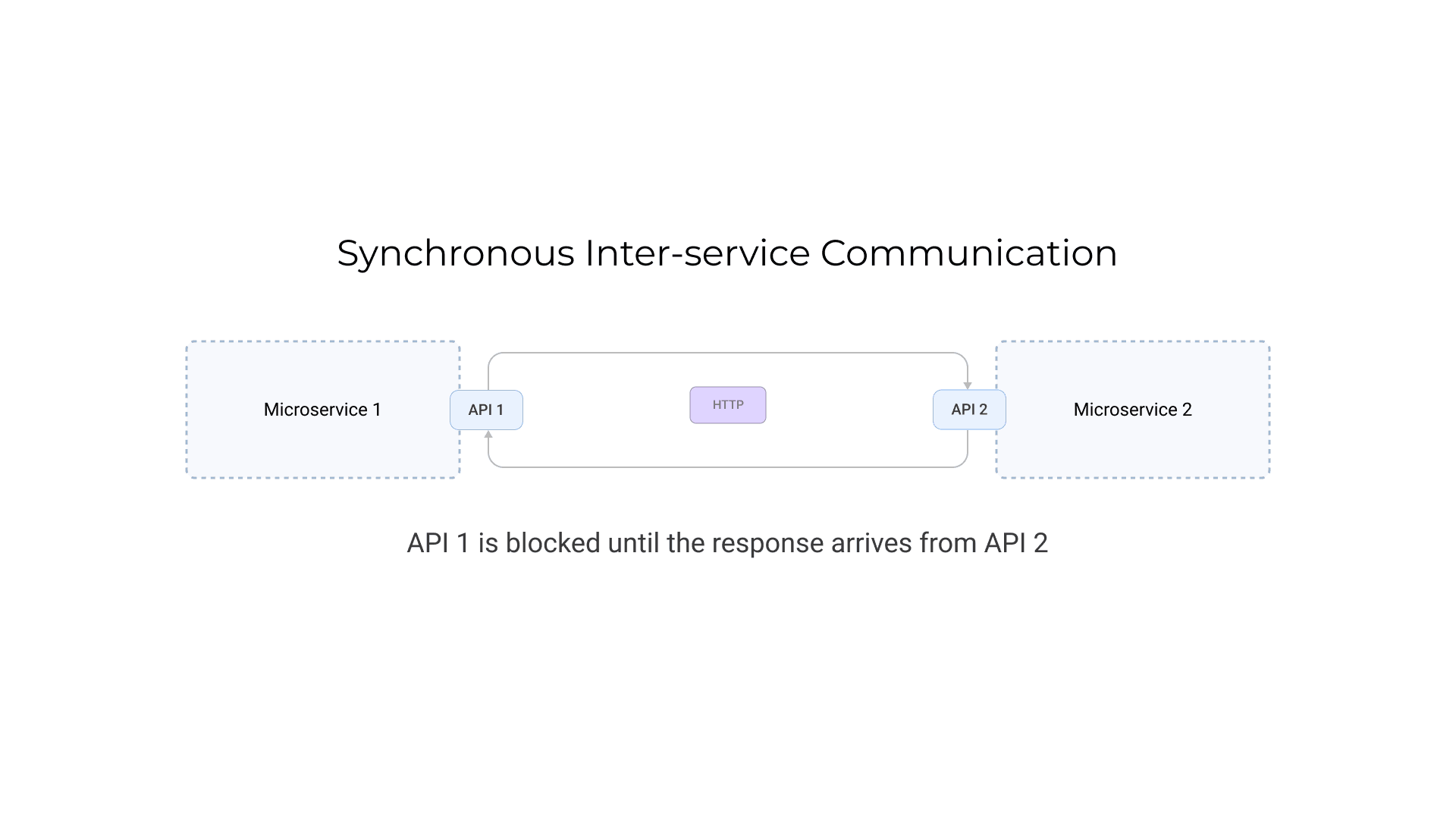
In synchronous microservices, data flows back and forth through service endpoints in a blocking manner. For instance, in an HTTP request/response scenario, the caller is held in the interaction until a response is received. This means that regardless of the response time, whether for a fraction of a second or several seconds, the caller remains engaged in the interaction and cannot proceed to other tasks until the response arrives. RESTful services exemplify this synchronous approach to microservices architecture.
Advantages:
- Simplicity and predictability: The execution flow is clear and easy to understand.
- Immediate feedback: Requestors receive responses immediately, making it ideal for interactive applications.
Disadvantages:
- Latency: Requestors are held up until responses arrive, potentially causing performance bottlenecks if the receiving service is slow.
- Coupling: Services become tightly interconnected, hindering independent scaling and making changes more challenging.
Real-world Examples of Synchronous Communication in Microservices
1. Live Chat Support
- Flow: The user enters a chat message, and the system sends it to the chat agent service.
- Synchronous communication: The agent receives messages and responds to the user in real time.
- Benefits: Enables immediate interaction and builds trust and engagement with users.
2. Shopping Cart Checkout
- Flow: The user adds items to the cart and clicks “Checkout.”
- Synchronous communication: The cart service sends order requests to the payment service.
- Benefits: Immediate feedback for the user ensures payment is processed before proceeding to order creation.
These are just a few examples, and in general, you should understand that synchronous communication is ideal when you need:
- Instant feedback and interaction, like in real-time conversations.
- To make quick decisions and execute tasks immediately, or analyze and implement things on the spot.
- To create workflows where different tasks rely heavily on each other and need to be closely connected.
Asynchronous Communication
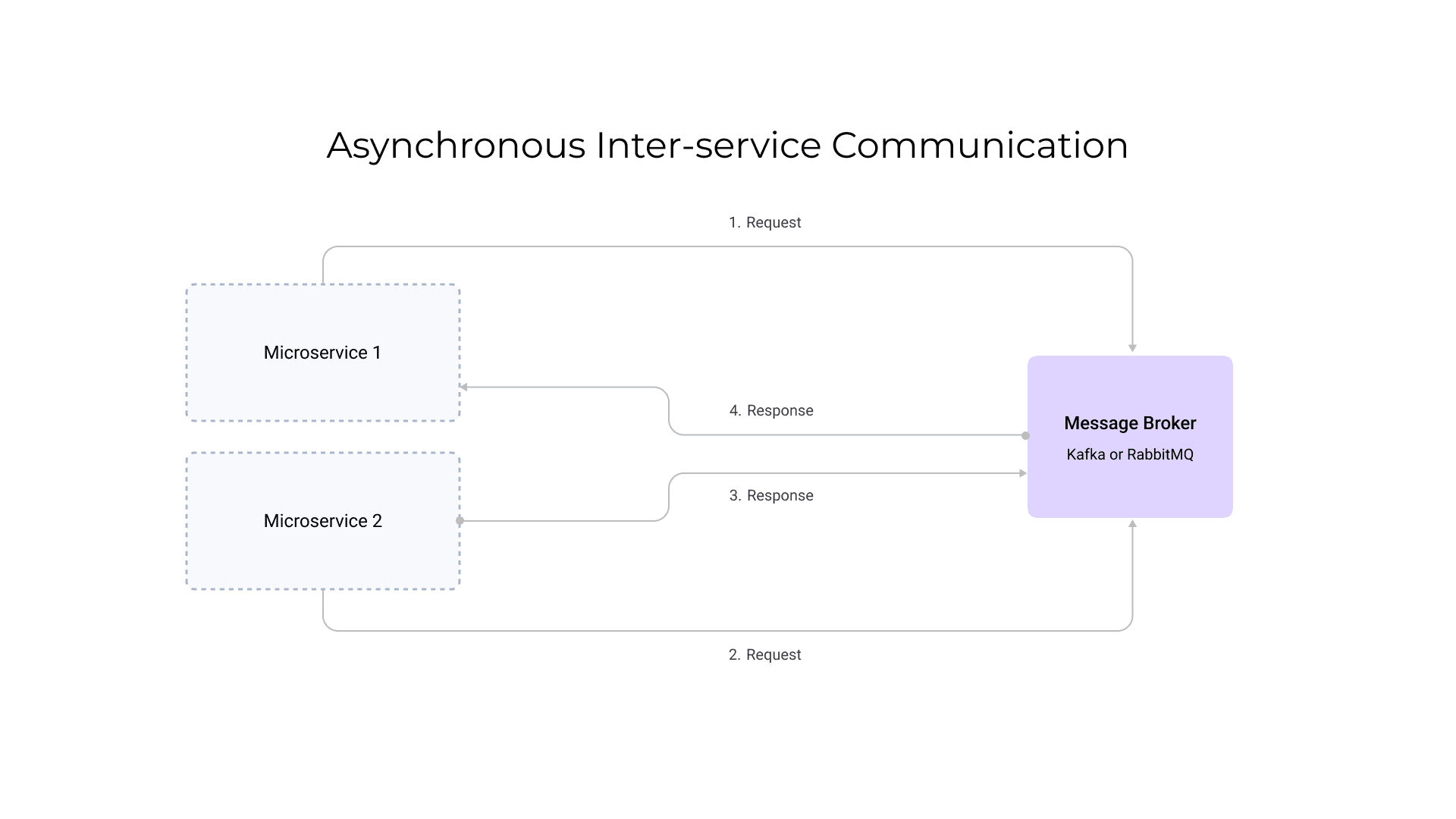
In an asynchronous microservice setup, requests to a service and their corresponding responses operate independently. Instead of direct, synchronous interactions, this architecture employs message broker technologies like Kafka or RabbitMQ to facilitate communication between services. These brokers serve as intermediaries, enabling services to exchange messages asynchronously, enhancing scalability, and decoupling components for improved flexibility and resilience.
Advantages:
- Non-blocking: Asynchronous communication allows the requester to proceed with other tasks while awaiting a response, preventing blocking and enhancing overall performance and scalability.
- Loose Coupling: Services operate independently, enabling easier adjustments and scaling of individual components without disrupting the entire system’s functionality.
- Resilience: Asynchronous communication offers robustness in handling failures and retries, providing a more reliable system compared to synchronous approaches.
Disadvantages:
- Increased Complexity: Implementing asynchronous communication requires dealing with additional complexities compared to synchronous methods, potentially adding overhead to development and maintenance processes.
- Delayed Feedback: The requester might experience delays in receiving responses, which could pose challenges for applications requiring immediate feedback or real-time updates.
Real-world Examples of Asynchronous Communication in Microservices
1. Email Confirmation and Notifications
- Flow: User registers, order is placed, or action is completed.
- Asynchronous communication: Registration service sends message to email queue. Notification service consumes messages later and sends emails.
- Benefits: Decoupling of services; improved scalability; emails sent even if registration/order fails temporarily.
2. Background Processing and Data Analysis
- Flow: The application receives large data files or performs complex calculations.
- Asynchronous communication: The application sends data/tasks to the processing queue. Processing service consumes messages and performs tasks in the background.
- Benefits: Improved responsiveness of primary application, data analysis, or processing without blocking the user interface.
3. Social Media Feed Updates
- Flow: User posts content or interacts with others.
- Asynchronous communication: Post service publishes a message to the feed queue. The feed service subscribes to the queue and updates user feeds in the background.
- Benefits: Scalable updates; prevents overloading the user interface with real-time updates; allows for efficient batch processing.
These instances highlight how asynchronous communication drives microservices architecture forward by disentangling services, enhancing scalability, and facilitating background operations without disrupting crucial user interactions. Asynchronous communication shines brightest when:
- Instant feedback isn’t a priority.
- Background tasks or extended processes are necessary.
- Prioritizing decoupling and scalability is paramount.
Conclusion
In determining whether to employ synchronous or asynchronous communication in your microservices architecture, consider the following guidelines:
- Opt for synchronous communication when immediate feedback is crucial, especially for user interactions or mission-critical operations.
- Choose asynchronous communication for tasks that can operate independently, such as background processes, data processing, or notification delivery.
- Embrace hybrid approaches, blending synchronous and asynchronous methods as needed to strike a balance between responsiveness and scalability, ensuring optimal flexibility for your system.